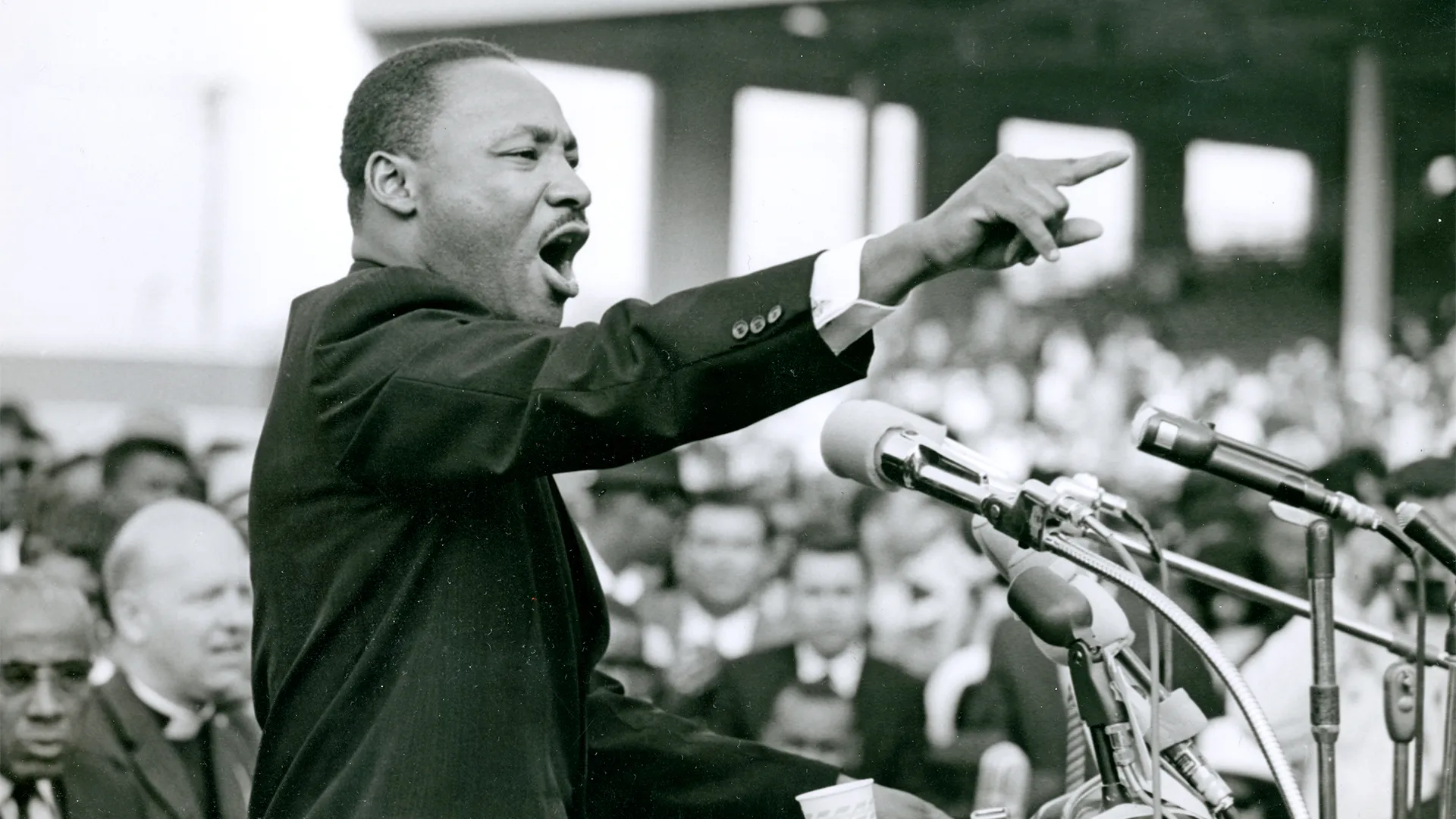
One of the most iconic speeches in history, advocating for civil and economic rights and an end to racism.
Dr. King's leadership in the 1955 boycott led to a Supreme Court decision declaring segregation on buses unconstitutional.
In 1964, Martin Luther King Jr. became the youngest recipient of the Nobel Peace Prize for his nonviolent struggle for civil rights.
The historic 1965 marches led to the Voting Rights Act, ensuring equal voting rights for all.
Dr. King organized a movement to desegregate public facilities in Birmingham, Alabama.
Dr. King's 1963 letter outlined the moral foundations of the civil rights movement.
Over 250,000 people gathered in Washington, D.C., to advocate for civil and economic rights in 1963.
Dr. King was assassinated in 1968, but his legacy of justice and equality lives on worldwide.
Dr. King co-founded this organization to coordinate civil rights activities across the South.
Dr. King's philosophy of nonviolence inspired generations to fight for equality and justice.
"I Have a Dream" speech by Dr. Martin Luther King Jr. in 1963.
Footage of the Selma to Montgomery march, a turning point in the civil rights movement.